






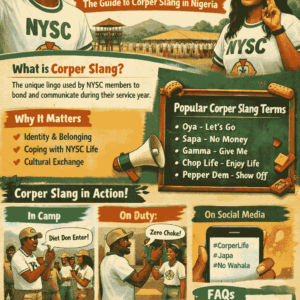
In Nigeria, the term corper slang refers to the unique set of informal words, phrases, and expressions used by youth corps members (popularly called corpers) involved in the National Youth Service Corps (NYSC) program. These special linguistic expressions are a vibrant part of Nigerian culture and serve as both a social identifier and a bonding mechanism among corps members.
At its core, corper slang is more than just playful language it reflects the shared experiences, struggles, triumphs, and humor of Nigerians serving their mandatory one-year national service. From camp life to community assignments, from parades to parties, corpers use slang to express identity, create solidarity, and even navigate challenges in fresh and creative ways.
The History of NYSC and the Birth of Corper Slang
To understand corper slang, you need to first know about the National Youth Service Corps (NYSC) a program established in 1973 by the Nigerian government to promote national unity following the Nigerian Civil War. Every Nigerian graduate under the age of 30 is required to participate in this year-long service, which includes orientation, primary assignment, and community development service.
Because thousands of graduates from diverse tribes and languages converge in common camps and workplaces, there arose a shared culture and language among them. That shared language eventually became what we know today as corper slang a lexicon that thrives on creativity, efficiency, and inside jokes.
Over the decades, corper slang has evolved, borrowing words from pidgin English, local languages, pop culture, school campus codes, and even social media trends. Essentially, corper slang stands as a linguistic tapestry of Nigeria’s dynamic youth culture.
Why Does Corper Slang Exist? A Sociolinguistic Perspective
Identity and Belonging
Being called a corper is more than holding a badge; it means belonging to a unique community straddling diverse backgrounds. Corper slang reinforces that sense of identity and belonging. When a fellow corper says something like “Oya gist,” it signals “Let’s chat,” and instantly creates camaraderie.
Coping with NYSC Realities
The NYSC program brings unprecedented challenges from early morning parades to unfamiliar environments. Corper slang acts as a psychological relief valve. Through humor and creativity, corpers lighten stressful situations and form emotional connections.
Informal Communication
Formal communication (like memos and postings) often feels rigid within NYSC. Corper slang fills this gap with more expressive, informal, and efficient modes of exchange. It reduces complex sentiments into digestible, relatable phrases.
Common Examples of Corper Slang and Their Meanings
Below is a selection of widely-used corper slang expressions, along with explanations you’ll likely hear both in camp and in community postings:
| Slang Term | Meaning / Usage |
|---|---|
| Oya | Go ahead / Let’s do it |
| Gist | Talk / Chat |
| Zona | NYSC orientation camp |
| Beto | Bed space / sleeping area |
| Maga | Someone easily deceived |
| Sabi | Know / Understand |
| Sapa | Broke / No money |
| Coco | Coconut (used to describe someone simple) |
| Chop Life | Enjoy life |
| Pepper Dem | Show off / Impress others |
| Carry Go | Proceed / Continue |
| Gbedu | Music / Party |
| Zero Choke | Don’t worry / Stay calm |
| Level Up | Improve or enhance (skills or life) |
| Street Cred | Respect earned from peers |
These are just a few expressions that make up the living archive of corper slang. For a deeper dive into Nigerian expressions and meanings, you can explore resources like Wiktionary or Pidgin dictionaries which often document evolving Nigerian slang.
How Corper Slang Reflects Nigerian Culture and Youth Trends
Corper slang isn’t isolated; it reflects broader Nigerian linguistic creativity. Because Nigeria is multilingual — with over 500 languages — slang becomes a melting pot of influences. Many corper slang terms borrow from Nigerian Pidgin English, which itself is a fusion of English and local languages.
For example:
- “Oya gist” blends English and Pidgin to mean “Let’s talk.”
- “Sapa” is a slang coinage describing money struggles — relatable not just to corpers but to many youths.
- “Pepper dem” comes from Pidgin, meaning to boast or show off.
This integration of local languages and Pidgin into corper slang makes the expressions rich, relatable, and constantly evolving. New slang is born every year as each group of corpers brings fresh creativity.
Corper Slang in Daily Life: From Camp to Community
In Orientation Camps
Orientation camps are where corper slang thrives. Chorus chants, drill commands, codes about food rations, early morning wake-ups, and shared struggles give rise to playful expressions like:
- “Diet don enter” — Meaning food portions are small.
- “Oga reception” — Referring to the reception center teamwork.
- “Assembly ground gist” — Talking while assembling.
In Primary Assignments
When corpers leave camp for their primary assignments (places of work), corper slang follows. Whether in offices, schools, hospitals, or NGOs, corpers use slang to communicate camaraderie, frustrations, achievements, and daily experiences — often with humor and flair.
In Social Media
Cultural life outside camp also shapes corper slang. Platforms like Instagram, Twitter (X), YouTube, and TikTok accelerate the spread of trending slang. Viral videos, memes, and challenges often get interwoven into corper slang lexicon.
Frequently Used Corper Slang in Messages and Social Posts
Corper slang also extends to online communication. Here are some texting abbreviations and phrases you might see:
- TML — Till my last (work)
- Japa — To flee situation (contextual usage)
- No Wahala — No problem / It’s fine
- Mad Oga — Chief / Big Boss
- Story Boss — Someone who tells many stories
These phrases, while informal, help convey sentiments quickly and colorfully. They also strengthen community bonds once their meaning is widely shared.
Regional Variations of Corper Slang Across Nigeria
Nigeria’s diverse ethnic and linguistic landscape means that corper slang sometimes carries regional flavors. While many core terms are widely understood nationwide, regional corps camps or groups often develop localized versions or variants of expressions.
For example:
- In the South-West, Yoruba influences might change intonation or meaning.
- In the South-East, Igbo expressions might get blended into camp slang.
- In the North, Hausa influences might lead some phrases to be pronounced differently.
Despite these regional touches, many corper slang terms remain widely understood across states. It’s part of how the NYSC fosters unity.
The Social Impact of Corper Slang on Youth Communication
Corper slang isn’t just playful chatter it has real social significance:
Identity Building
Corpers nationwide form friendships, networks, and lifelong bonds. Shared slang reinforces this group identity long after service year ends.
Cultural Exchange
Because people from different ethnic groups interact in NYSC, corper slang becomes a vehicle for cultural exchange, inspiring greater understanding among diverse communities.
Language Evolution
Over time, some corper slang enters mainstream Nigerian slang, and even broader African youth vocabularies. For example, expressions like “No Wahala” and “Oya” are now widely used beyond their origins.
Learning Corper Slang: Tips for New Corps Members
If you’re about to join NYSC or you just want to understand corper slang, here are practical tips:
Listen More at First
Attend camp activities and listen to how people talk. Slang often makes sense through context.
Ask for Meanings
Corpers are usually happy to explain slang terms. Don’t be shy — it’s part of bonding.
Immerse in Social Groups
Join WhatsApp or Telegram groups, hang out with peers, and engage in casual conversations.
Follow Social Media
Search hashtags like #NYSC2025, #CorperLife, or #CorperSlang to see real-time usage.
Practice
Use the slang yourself. The more you use it, the easier it becomes.
Corper Slang and Professional Contexts: How to Balance Both
Corper life isn’t just about slang and jokes it’s also about professional service. When writing reports, attending official meetings, or communicating with supervisors, it’s important to maintain formal English and avoid jargon.
Here’s how to balance both:
- Use formal language in official documents.
- Reserve corper slang for casual chats, messages, and bonding moments.
- Be sensitive to audiences who may not understand slang.
This balance helps preserve professionalism while still enjoying the cultural richness of corper slang.
Conclusion: Corper Slang as a Cultural Phenomenon
In summary, corper slang is a dynamic, creative, and deeply cultural set of expressions used by Nigerian corps members. It’s born out of shared experiences in the NYSC program, shaped by multicultural influences, and spread through both face-to-face communication and digital platforms.
Today, corper slang reflects:
- Unity and identity among youth corps members
- Cultural exchange across ethnic lines
- Evolution of Nigerian youth language
- A living tradition of playful, expressive communication
Whether you’re preparing for NYSC, engaging with friends who have served, or simply fascinated by linguistic cultures, understanding corper slang gives you insight into one of Nigeria’s most energetic and expressive youth subcultures.
Also Read: Can I Go to NYSC at 30? Everything You Need to Know Before Mobilization
FAQs About Corper Slang
1. What is the meaning of “zona” in corper slang?
Zona refers to the orientation camp where NYSC members first gather and begin their service year.
2. Is corper slang used outside NYSC circles?
Yes. Many corper slang terms have spread into broader Nigerian youth slang and are understood beyond NYSC contexts.
3. Where can I learn more corper slang online?
You can explore Nigerian language resources, Pidgin dictionaries, and social media platforms like Instagram and TikTok, where corpers often share expressions and cultural content.













+ There are no comments
Add yours